
Efficient Adsorption Media for Gas Purification and Recovery
Gas-phase adsorption places different demands on pore structure, mechanical strength and airflow resistance. This series allows pore distribution and product form to be matched to the target compounds (such as BTEX, ketones, esters and sulphides) and concentration range, balancing adsorption capacity against service life.
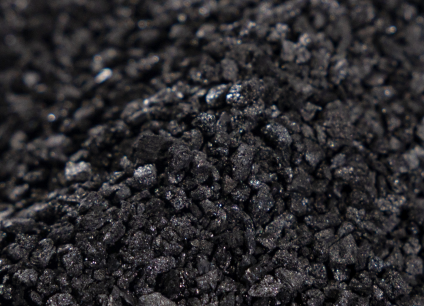
Gas Treatment GAC
Made from premium bituminous coal through high-temperature activation and refining, with high mechanical strength, a well-developed pore structure and outstanding adsorption performance. Widely used in industrial off-gas treatment, air purification, solvent vapour recovery, natural gas purification and respirators.
View DetailsCustomized to Gas Composition
We match the micropore/mesopore ratio and impregnation chemistry (alkali, acid or sulphur loading) to the molecular size and polarity of the target pollutant, improving selective adsorption.
Ask an EngineerTypical Applications
Industrial VOC Abatement
Adsorption and concentration of organic off-gas in the painting, printing and chemical industries to meet emission limits.
Solvent Vapour Recovery
Recovery and reuse of benzene, toluene, acetone, dichloromethane and other organic solvents.
Desulfurization, Deodorization & Protection
Natural gas desulfurization, odour control, respirator cartridges and air-purification filters.
Balancing Strength, Porosity and Pressure Drop
Gas-phase adsorbers usually run continuously, so mechanical strength and pressure-drop characteristics directly affect carbon replacement intervals and energy consumption.
High Mechanical Strength
Granules resist abrasion and crushing, reducing bed attrition and pressure-drop rise and extending service life.
Tunable Porosity
Degree of activation and forming technology adjust the micropore/mesopore ratio to match target compounds of different molecular size.
Multiple Forms
Granular, cylindrical, crushed and honeycomb forms for fixed-bed and moving-bed systems.
Need a Grade for Your Off-Gas Duty?
Give us the off-gas composition, concentration, flow rate and temperature, and we will match the carbon type, bed volume and regeneration or replacement plan.